Tuesday, January 26, 2016


Winter tire insurance discount promised for Jan. 1 in Ontario

Commitment comes as promise to reduce rates not achieved

CBC News Posted: Oct 14, 2015 2:02 PM ET Last Updated: Oct 14, 2015 2:02 PM ET
Ontario plans to require auto insurers to offer discounts starting Jan. 1, 2016 to drivers who buy and install winter tires.
Ontario drivers with winter tires on their vehicles have been promised an insurance discount starting in January, according to Finance Minister Charles Sousa.
Effective January 1, 2016, the government will require all private insurers to offer discounts to people who buy and install winter tires, the Ministry of Finance said in a release.
The announcement today reflects a plan originally introduced in the provincial budget in April.
Winter tires "enhance safety and reduce the likelihood of collisions by improving traction, braking and handling in frost, snow, slush and under cold and icy conditions," the release stated.
The provincial government has been under fire for not meeting its pledge to reduce auto insurance rates by 15 per cent this fall. 
Earlier this month, Sousa named former WSIB head David Marshall as an auto insurance adviser "to identify additional opportunities for auto insurance reform," according to a government release.

I would like to acknowledge CBC News for the publication of this article. This content was sourced on January 26, 2016.

Tips for Removing Ice Dams

 
You can help prevent serious damage to both the roof and inside of your home by minimizing the likelihood that an ice dam will develop, and by removing one as soon as you spot it. Ice dams can form when water from melting snow re-freezes at the edge of your roofline. Without roof snow removal, an ice dam may grow large enough to prevent water from draining off the roof. This water can then back up underneath roof shingles and make its way into your home.

How to Help Prevent an Ice Dam from Forming:

How does an ice dam form?
  • Remove snow from your roof after every storm. To begin with, use a roof rake to clear snow from the edge of your roof upwards of three to four feet immediately after each storm. In addition to helping prevent an ice dam from forming, this will lessen the stress on your home’s roof. The amount of snow and ice your roof can support will depend on a number of factors, including the roof type and the age and condition of the structure. But a good rule to keep in mind is if more than a foot of heavy, wet snow and ice has accumulated on your roof, you should have it removed.
  • Clear downspouts. An easy way to help snow and ice drain off your roof is to make sure the area around your downspouts is clear. This can help prevent standing water from collecting near the gutter downspout.

How Do You Know if You Have an Ice Dam?

  • Look carefully at the icicles around the exterior of your house. If they are confined to the gutters and there is no water trapped behind them, then an ice dam has likely not formed. Nonetheless, icicles can pose a danger to people when they fall off, so try to safely knock them down while standing on the ground, making sure not to stand directly beneath them. If you cannot safely reach them from the ground, consider hiring a contractor to help.
  • Check for water stains or moisture in the attic or around the tops of exterior walls on the top floor of your house. Stains and moisture may indicate that an ice dam has formed and water has penetrated the roof membrane.

How to Remove an Ice Dam:

  • Melt the ice dam. Fill a nylon stocking with calcium chloride ice melt, and place it vertically across the ice dam so that it melts a channel through the dam. If you try this, make sure you can safely position the ice melt on your roof, and make sure to use calcium chloride, not rock salt. Rock salt will damage your roof. Also, be aware that shrubbery and plants near the gutters or downspouts may be damaged.
  • Get professional help. If you cannot safely reach the roof, avoid using a ladder in snowy and icy conditions. Consider hiring a contractor to remove the ice dam.

Long-term Tips for Preventing Ice Dams:

  • Insulate your attic. Make sure your attic is well insulated to help prevent the melting-and-freezing cycle that causes ice dams to form. Check and seal places where warm air could leak from your house to the attic, including vent pipes, exhaust fans, chimneys, attic hatches and light fixtures.
  • Install a water-repellent membrane. When replacing a roof, make sure to install a water repellent membrane underneath the shingles. This acts as an extra barrier that helps prevent water from seeping inside the building.


I would like to acknowledge Travelers Canada for the publication of this article. This content was sourced on January 26, 2016.


Snow Shoveling Safety Tips

When the driveway and walkways are coated in a thick blanket of snow, it is time to get a shovel out for what some consider to be a dreaded chore. But before you tackle the first snowfall of the season, take some time to read these safety snow shoveling tips to help avoid any potential injuries.
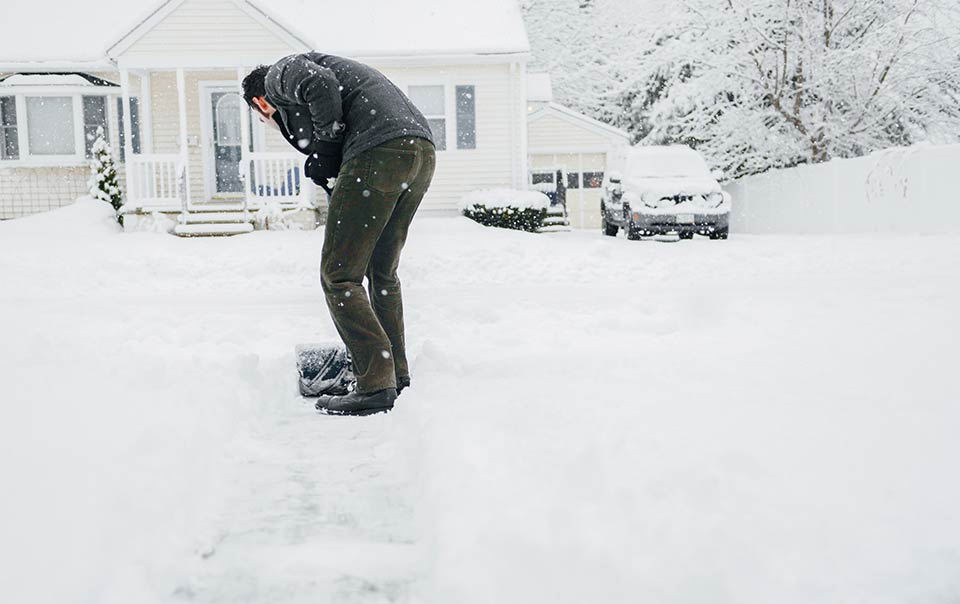
Person shoveling snow outside houseSnow shoveling can lead to a number of health risks for many people, from back injuries to heart attacks. The mix of cold temperatures and physical exertion increases the workload on the heart,¹ which may increase the risk of a heart attack for some. According to the American Heart Association, even walking through heavy, wet snow can place strain on your heart.
The following tips can help keep you safer when you set out to shovel:
  • Warm up. Warm your muscles before heading out to shovel by doing some light movements, such as bending side to side or walking in place.
  • Push rather than lift. Pushing the snow with the shovel instead of lifting can help reduce the strain on your body. When lifting snow, bend your knees and use your legs when possible.
  • Choose your shovel wisely. Ergonomically-designed shovels can help reduce the amount of bending you have to do.
  • Lighten your load. Consider using a lighter-weight plastic shovel instead of a metal one to help decrease the weight being lifted.
  • Hit the pause button. Pace yourself and be sure to take frequent breaks. Consider taking a break after 20 to 30 minutes of shoveling, especially when the snow is wet.
  • Consider multiple trips. Consider shoveling periodically throughout the storm to avoid having to move large amounts of snow at once.
  • Keep up with snowfall. Try to shovel snow shortly after it falls, when it is lighter and fluffier. The longer snow stays on the ground, the wetter it can become. Wet snow is heavier and harder to move.
  • Wear layers. Dress in layers and remove them as you get warm to help maintain a comfortable body temperature.
  • Stay hydrated. Drink plenty of water to stay hydrated while shoveling.
A national study² found that the most common shoveling-related injuries were to the lower back. Cardiac-related injuries account for only 7% of all injuries, but they were the most serious in nature. If you do not exercise on a regular basis, are middle-aged or older, or have any health conditions, such as heart disease or high blood pressure, you should check with your doctor before doing any strenuous shoveling. Consider using a snow blower or snow removal service as an alternative means of snow removal.

Snow and Ice Removal Requirements

Snow and ice not only pose a potential risk to you but also to others. As a property owner, you are responsible for making a reasonable effort to keep public walking areas around your property clear of snow and ice. Pre-treating your walkways and other paved surfaces with an anti-icing product can help make snow and ice removal easier.
Consider stocking up on ice melt in advance, as it sometimes sells out during long winters. You can store unused ice melt in an airtight container, out of reach from children and pets. Be aware that rock salt can damage brick, stone, asphalt and concrete walkways.
Be sure to check your local codes and ordinances regarding snow and ice removal requirements.


Sources:
¹ American Heart Association,
http://www.heart.org/HEARTORG/Affiliate/Shoveling-Snow-Health-Hazards_UCM_426562_Article.jsp
² Nationwide Children's,
http://www.nationwidechildrens.org/news-room-articles/new-national-study-finds-11500-emergency-department-visits-nearly-100-deaths-related-to-snow-shoveling-each-year?contentid=86424


I would like to acknowledge Travelers Canada for the publication of this article. This content was sourced on January 26, 2016.

Monday, June 8, 2015

Road Safety Legislationin Passed in the Province of Ontario

Ontario Passes Legislation to Improve Road Safety
New Rules Will Help Reduce Collisions, Injuries and Fatalities
 
Today, Ontario passed the Making Ontario's Roads Safer Act to help ensure that the province's roads are among the safest in North America.
 
In order to reduce collisions, injuries and fatalities on Ontario's roads, the new act will: 
  • Increase fines for distracted driving from the current range of $60 to $500 to a range of $300 to $1,000, assigning three demerit points upon conviction, and escalating sanctions on convictions for novice drivers
  • Apply current alcohol-impaired sanctions to drivers who are drug impaired
  • Introduce additional measures to address repeat offenders of alcohol impaired driving
  • Require drivers to wait until pedestrians have completely crossed the road before proceeding at school crossings and pedestrian crossovers
  • Increase fines and demerits for drivers who 'door' cyclists, and require all drivers to maintain a minimum distance of one-metre when passing cyclists where possible
  • Help municipalities collect unpaid fines by expanding licence plate denial for drivers who do not pay certain Provincial Offences Act fines.
  • Allow a broader range of qualified medical professionals to identify and report medically unfit drivers and, clarify the types of medical conditions to be reported.
The new fines and measures will come into force over the coming months. The new legislation builds on action that the province has already taken to improve road safety, including making booster seats mandatory, ensuring every person wears a seatbelt, introducing the Graduated Licensing System for novice drivers, establishing stiffer penalties for aggressive driving and excess speeding, bringing in tougher impaired driving laws, and banning hand-held devices while driving. 
 
Ensuring Ontario's roads and highways are safe is part of the government's economic plan for Ontario. The four-part plan includes investing in people's talents and skills, making the largest investment in public infrastructure in Ontario's history, creating a dynamic, innovative environment where business thrives, and building a secure retirement savings plan.

Wednesday, October 8, 2014

Should you buy rental car insurance?


While economical, declining insurance coverage when renting a car may not always be the best choice.

Thinking of renting a car? Whether you settle on the compact or splurge for the SUV, you may have a more important decision to make before you get to the counter: whether to purchase rental car insurance.

It’s a difficult decision, given the fact that you may already be covered through your existing car insurance or your credit card. Rental car insurance, also known as optional vehicle protection or loss-damage waiver can cost as much as $22 per day and shifts liability for collision damage from the person renting the car back to the car rental company. It will generally kick in if the car is vandalized or stolen as well. The other “accept or decline” decision involves liability insurance, which usually provides protection for up to $1 million and costs about $10 a day over the rental charge. Most major credit card providers offer rental insurance to cardholders, but often they only make it available to higher-level members, so check with your credit card company first. Even then, credit cards usually cover damage to loss or the rented vehicle, not for other cars, persons, or property.

Generally your existing auto insurance will cover you when your rent a car, provided you are using it for recreation and not for business. In other words, running about town shouldn't be a problem, but renting a vehicle that helps you earn a living might be. The type of vehicle you rent will also affect your coverage. If you’re renting a cargo van to move someone back to school, for instance, or picking up supplies for the garden, it’s unlikely that your personal or credit card policy will cover you. If your existing car insurance policy includes collision and comprehensive coverage, then this should also cover the rental as well, but only within the limits of your current coverage. If you have dropped comprehensive or collision coverage from your insurance on your older car, you would be exposed if your rental car is stolen or damaged in an accident.

During an accident on a rental, there are a couple things to keep in mind:

·         Your insurance coverage deductible applies to the rental like if it was your own vehicle.  You are responsible for the deductible amount so consider is the “per day” cost of the rental coverage is going to amount more than your deductible.

·         You’re exposed if you are renting a vehicle while your insured vehicle is also on the road.

·         Keep in mind your own coverage limitations because they will transfer to the rental vehicle as well.
·         When driving across the border, as yourself if your coverage extends across with you.


By accepting the rental coverage at the counter, you avoid all of this. Your insurance company won’t generally be notified since it’s actually not involved in your accident on the rental.

Canada Not-For-Profit Corporations Act


All Not-for-Profit (“NFP”) organizations incorporated under the Canada Corporations Act, part II, must transition to the Not-for-Profit Corporations Act (“NFP ACT”) by October 17, 2014. Those NFP’s created after October 17, 2011 would have already been formed under the new NFP Act and no further action will be required. If a NFP, formed before October 17, 2011 does not transition to the NFP Act by October 17, 2014, Corporations Canada will, upon first giving written notice to the NFP and to each of its directors, dissolve that entity. Readers are encouraged to consult legal advice on the conversion process and the specific regulations under the NFP Act.

Financial Reporting Considerations

Under the NFP Act, each NFP will be classified as either, soliciting or non-soliciting. A soliciting NFP would have received more than 10,000 from public sources, including public donations, federal or provincial governments, or other conduit entities in its last financial year.


For financial reporting purposes, the NFP Act further separates NFP’s into two categories. Designated NFP’s are those with gross annual revenues for its last financial year that is no more than $50,000 and non-soliciting NFP’s with gross annual revenues for its last completed financial year that is equal to or less than $1 million thresholds.


Soliciting

Non-Soliciting

Annual Revenue for last financial year
Designated with revenues of $50,000 or less
Non-designated with revenues of more than $50,000 and up to $250,000

Non-Designated with revenues of more than $250,000
Designated with revenues of $1 Million or less
Non-designated with revenues of more than $1 million

Level of financial review
A review engagement unless a unanimous resolution has been passed requiring a compilation or an ordinary resolution for an audit
Must have an audit unless a special resolution has been passed to require a review engagement
Must have an audit engagement
A review engagement unless a unanimous resolution has been passed requiring a compilation or an or an ordinary resolution for an audit engagement
Must have an audit engagement

General Outline of steps involved in the conversion to the Canada Not-for-Profit corporations Act:

  •        Review of the NFP’s existing letters patent and by-laws by the board members. These documents will have to be reviewed by the board of directors to insure they are in compliance with the NFP Act. Copies of the NFP’s existing documents are also available from corporations Canada if the NFP is not able to locate them.

  • Prepare articles for continuance – These articles will be attached to the certificate of continuance that is issued to the NFP by Corporations Canada. Existing federally incorporated NFP’s do not have to pay a filing fee to obtain a Certificate of Continuance.
  • Update by-laws – As a result of the extreme regulation of the NFP Act, there are only two by-law provisions that are mandatory under the NFP Act. At a minimum, NFP’s by-laws need to address the conditions required for memberships and notice of meetings to members who are entitled to vote at the meeting.
  • Get members approval – A meeting of members will generally need to be held as part of the transition process. The NFP Act requires that the Articles of Continuance be approved by a special resolution of members, which is a resolution that is passed by at least two-thirds of the votes cast at a meeting.
This informational piece has been brought with acknowledgement to the Williams and Partners Newsletter, Summer 2014 

The Increasing Risk of Water Damage

Water Damage is on the rise

Water Damage has now surpassed fire as the leading cause of personal property claims. It is estimated that, on average, the Canadian insurance industry pays about $1.7 billion per year in claims due to water damage, and here is why:

·         Changing weather, unpredictable weather patterns
·         Increased precipitation
·         Aging municipal structures (water and sewer pipelines)
·         Home improvement trends, i.e. basement family rooms
·         Increased use of hot tubs, dishwashers and other operating appliances

Home insurance was created when fire was the major cause of loss, and homes did not have finished basements with expensive furnishings as they often do today. There are possible ways to save on your home insurance’s water damage premium if applied correctly:

·         Keeping an unfinished basement can save on water damage or water escape premiums
·         A tank less water heater can impact savings
·         A hot water tank that is less than 6 years old can also save on your premium
·         Installing an automatic water shut-off valve and sensors

·         A professionally installed sump pump or backwater valve can save on water back-up or water escape premiums


Flood vs. Sewer Backup/Water Escape Backup Coverage: What you should know

A 2004 survey conducted for the Insurance Bureau of Canada found that nearly 61% of Canadians mistakenly believe that their home insurance provides coverage for overland flooding. The truth of the matter is that the home insurance currently offer to Canadians regardless of where they live does not cover storm surges and overland flooding.
Too much water in urban areas poses a different risk. Sewer back-up occurs when the city municipal drainage system overflows and sends water back through the pipes and into your home. This may happen for a variety of reasons, but the most common is a great deal of water from rainfall or snow melt overwhelming the system.
Sewer back-up/water escape coverage is available for purchase as an add-on to an existing home insurance policy. As with any optional coverage, it is subject to the underwriting guidelines set out by your insurer, so please contact us at Sturino & Associates Insurance Brokers Ltd to make sure you are protected.

A Few Tips on How to Prevent Water Damage

·         Backwater Valves should be installed by a professional plumber, and should allow acces for regular maintenance.
·         Disconnect all downspouts connected to the municipal sewer system.
·         Make sure downspouts extend at least 6 feet (where possible) from exterior walls and drain away from the house.
·         Replace aging fixtures, tubs and toilets.
·         Ensure the home is checked during absences, especially during the heating season.
·         Consider switching to a tank less water heater.

Many municipalities have programs in place to help deal with sewer bac-up/water escape issues. Please contact us or stop by for additional resources and information on how to prevent water damage.

7 Jopling Avenue South
Etobicoke, ON M9B 3P4
416-231-9980

Source: Insurance Bureau of Canada – Telling the Weather Story